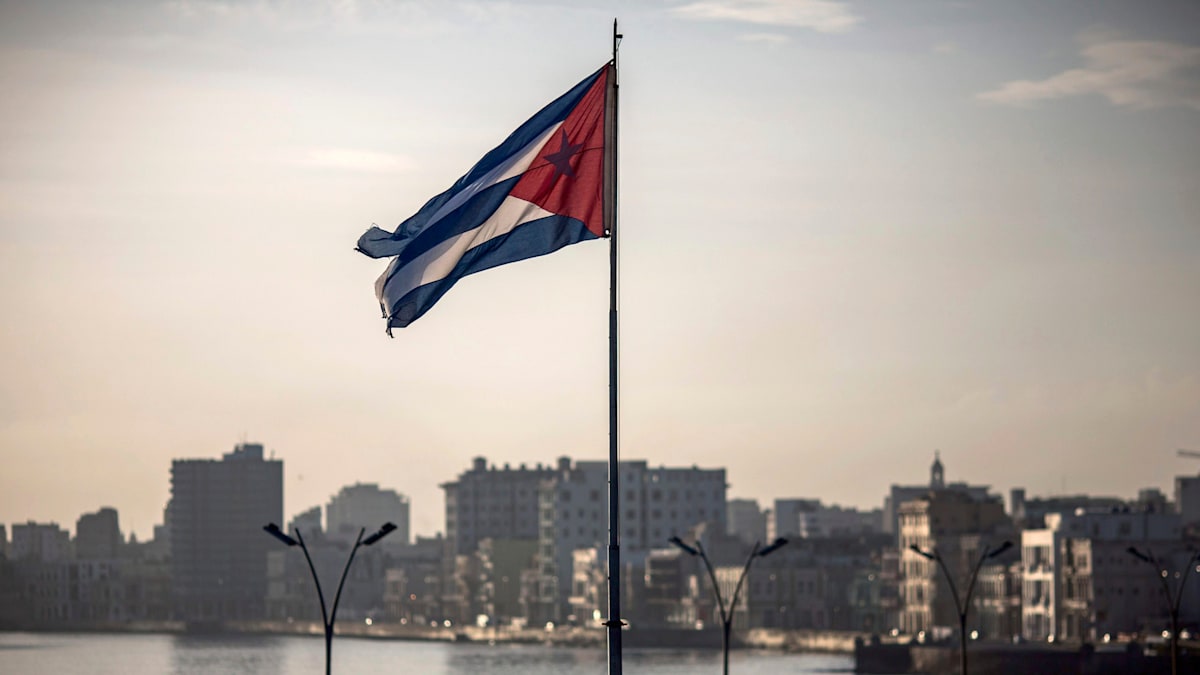
Cuba Claims 'Terror Plot' Thwarted After Deadly Shootout with US Speedboat
A dramatic and deadly confrontation off the coast of Cuba has ignited a fresh wave of geopolitical tension between Havana and Washington. Cuban authorities are asserting they foiled a "terror plot" originating from Florida, after a speedboat carrying individuals described as Cuban exiles engaged in a fatal
deadly Cuba coastal shootout with border guards. This incident, resulting in multiple casualties and the seizure of a cache of weapons, has prompted immediate calls for thorough investigation from the United States, casting a shadow of suspicion and uncertainty over the already strained bilateral relationship. The exact details surrounding the firefight remain disputed, with each nation presenting a narrative that underscores its own perspective and concerns. This article aims to provide comprehensive information regarding the "schusswechsel Kuba" – the shootout in Cuba – and its broader implications.
Escalating Drama: The Alleged Terror Plot Unveiled by Havana
According to Cuba's Interior Ministry, the incident unfolded dramatically in Cuban territorial waters, approximately one nautical mile from the coast, on a Wednesday morning. This critical location firmly places the alleged infiltration attempt within Cuba's sovereign domain, a point Havana has emphasized in its condemnation.
The Cuban Narrative: A Confrontation in Territorial Waters
The official Cuban account details how a border guard vessel approached a suspicious speedboat, registered in Florida with the number FL7726SH. As the Cuban patrol neared, the speedboat allegedly opened fire, injuring the commander of the Cuban Coast Guard. Cuban border guards then reportedly returned fire, leading to a fierce exchange. The immediate aftermath was grim: four individuals on board the speedboat were killed, and six others were wounded. These injured individuals were subsequently recovered from the vessel and are reportedly receiving medical treatment in Cuba. On the Cuban side, one border guard sustained injuries. Havana swiftly labeled the group's intentions as "terrorist purposes," aiming to infiltrate the island.
Arsenal of Intrusion: Weapons and Intentions
The claims by the Cuban Interior Ministry are further bolstered by the reported discovery of a significant arsenal on board the US-registered speedboat. This cache included "assault rifles, handguns, homemade explosive devices (Molotov cocktails), bulletproof vests, telescopic sights, and camouflage uniforms." The presence of such combat-ready equipment significantly strengthens Cuba's assertion that this was no ordinary maritime transgression but a deliberate, well-equipped attempt at violent intrusion. The implication is clear: the individuals were prepared for combat and destruction.
Identifying the Infiltrators: Profiles and Arrests
Adding another layer to their narrative, Cuban authorities identified all ten occupants of the speedboat as Cuban nationals residing in the United States. Furthermore, the Interior Ministry stated that some of these individuals had prior criminal records in Cuba for "criminal and violent activities." In what appears to be a separate but related development, Cuba also reported the arrest of an individual on Cuban soil who confessed to being sent from the US to participate in the operation. These details paint a picture of a coordinated, externally planned operation involving individuals with a history of anti-government sentiment or criminal behavior, aligning with Havana's long-standing concerns about hostile activities orchestrated from US soil.
Washington's Measured Response: Promises of Investigation Amidst Skepticism
The US government's initial reaction to the incident has been one of caution and a commitment to independent verification, rather than immediate acceptance of Havana's version of events. The geopolitical sensitivities surrounding US-Cuba relations mean that any claim from either side is often met with skepticism by the other.
Initial US Reaction: Caution and Lack of Detail
US Vice President JD Vance addressed journalists, indicating that the White House was reviewing the incident. He expressed hope that it was "not as bad as we fear it could be," acknowledging the potentially severe implications. Critically, Vance noted that the US government possessed "not many details" regarding the incident at the time of his statement. This early response highlighted a clear divergence in the immediate level of information available to each capital.
The Call for Due Diligence: "Unusual" Incident Under Scrutiny
US Secretary of State Marco Rubio further elaborated on Washington's stance, announcing that the US would investigate the "unusual" incident and "respond accordingly." Emphatically, Rubio stated before journalists in Saint Kitts and Nevis, "We will not base our conclusions on what they have told us," referring to the Havana authorities. He added, "I am very, very sure that we will get the full story of what happened here." This firm declaration underscores the US's intention to conduct its own thorough investigation, reflecting a deep-seated distrust of official Cuban communications, especially concerning politically charged events. The use of the word "unusual" suggests that even for the US, the circumstances of this shootout are perplexing and require careful scrutiny. Readers seeking more insights into the US response can refer to
US Vows Probe into 'Unusual' Cuba Speedboat Shootout Amid Havana Claims.
Beneath the Surface: Geopolitical Tensions Fueling the Fire
This deadly shootout did not occur in a vacuum. It is deeply embedded in the complex and often fraught history between the United States and Cuba, exacerbated by recent policy shifts and regional dynamics. Understanding these underlying tensions is crucial for comprehending the weight of the current accusations and responses.
A Troubled Strait: The US-Cuba Relationship
Geographically, Cuba and Florida are separated by merely 90 miles of ocean, a proximity that has historically fostered both cultural exchange and political conflict. The relationship has been characterized by decades of ideological opposition, a US embargo, and numerous attempts at both covert and overt actions from both sides. From the Bay of Pigs invasion to the Cuban Missile Crisis, the strait has been a flashpoint for international drama, and today's incident serves as a stark reminder of this enduring rivalry.
The Venezuela Factor: Oil Sanctions and Economic Pressure
Adding to the immediate pressure cooker situation were recent US policy decisions concerning Venezuela. Following the capture of Venezuelan President Nicolás Maduro in an alleged US-backed military operation in early January, then-President Donald Trump moved to cut off Venezuelan oil supplies to Cuba. He threatened additional US tariffs on any state supplying crude oil to the Caribbean nation. This oil blockade has severely exacerbated Cuba's already struggling communist-led economy, leading to widespread shortages and economic hardship. While the US Treasury Department later announced some easing of restrictions on Venezuelan oil exports, the impact of these policies on Cuba's stability and public sentiment cannot be overstated. Economic hardship often fuels discontent, which can, in turn, be exploited by various actors, both internal and external.
The Role of Exiles: Historical Precedent and Ongoing Divisions
The role of Cuban exiles residing in the US is a particularly sensitive and complex aspect of the US-Cuba dynamic. Since the 1959 revolution, various exile groups have sought to overthrow the communist government in Cuba, sometimes through militant means. These groups often operate with strong anti-Castro sentiments and have, at various points, received tacit or explicit support from elements within the US. Havana consistently views such activities as terrorism and foreign intervention, while some within the US see them as legitimate efforts to liberate Cuba. This historical context makes Cuba's "terror plot" claims particularly resonant within their political discourse, tapping into long-held grievances and fears.
Navigating the Information Schusswechsel Kuba: What Comes Next?
In the aftermath of such a high-stakes maritime shootout and conflicting narratives, the path forward is fraught with challenges. Both international observers and concerned citizens must critically evaluate the evolving information.
The Quest for Truth: Challenges in Independent Verification
One of the most significant challenges in this "information schusswechsel Kuba" is the difficulty in independently verifying the claims made by both Havana and Washington. Cuba operates under a tightly controlled information environment, while the US maintains a cautious stance, especially when dealing with accusations of state-sponsored terrorism or intervention. Without impartial international investigation or transparent sharing of evidence, the full truth may remain elusive, allowing competing narratives to persist.
Implications for Regional Stability
This incident has serious implications for regional stability. A confirmed "terror plot" originating from US soil would severely damage any prospects for rapprochement between the two nations and could even lead to calls for punitive measures. Conversely, if the US investigation uncovers a different set of facts, it could expose Cuban exaggerations or fabrications, further eroding trust. The event could also embolden or deter other dissident groups, depending on its perceived success or failure.
Practical Tips for Understanding Complex Geopolitical Events
When faced with such conflicting reports, it's essential for the public to:
- Seek Multiple Sources: Do not rely solely on one government's official statements. Consult news outlets from various regions and political leanings.
- Consider the Source's Agenda: Understand that governments often tailor information to serve their political interests.
- Look for Corroborating Evidence: Is there independent verification of claims, such as photographic evidence, witness accounts, or reports from international bodies?
- Examine Historical Context: Recognize how past events and ongoing tensions influence current narratives.
- Be Patient: Complex investigations take time. Avoid drawing hasty conclusions based on initial reports.
In conclusion, the deadly shootout off Cuba's coast represents a critical flashpoint in the enduring US-Cuba saga. Havana's definitive claims of a thwarted terror plot, complete with detailed accounts of weapons and intentions, stand in stark contrast to Washington's cautious and skeptical demand for an independent investigation. This incident is not merely a maritime skirmish but a microcosm of the deep-seated mistrust, historical grievances, and ongoing geopolitical maneuvering that define the relationship between these two close neighbors. As both nations embark on their respective inquiries, the world watches, hoping that clarity will emerge from the current fog of conflicting information, potentially averting further escalation in the turbulent waters of the Caribbean.